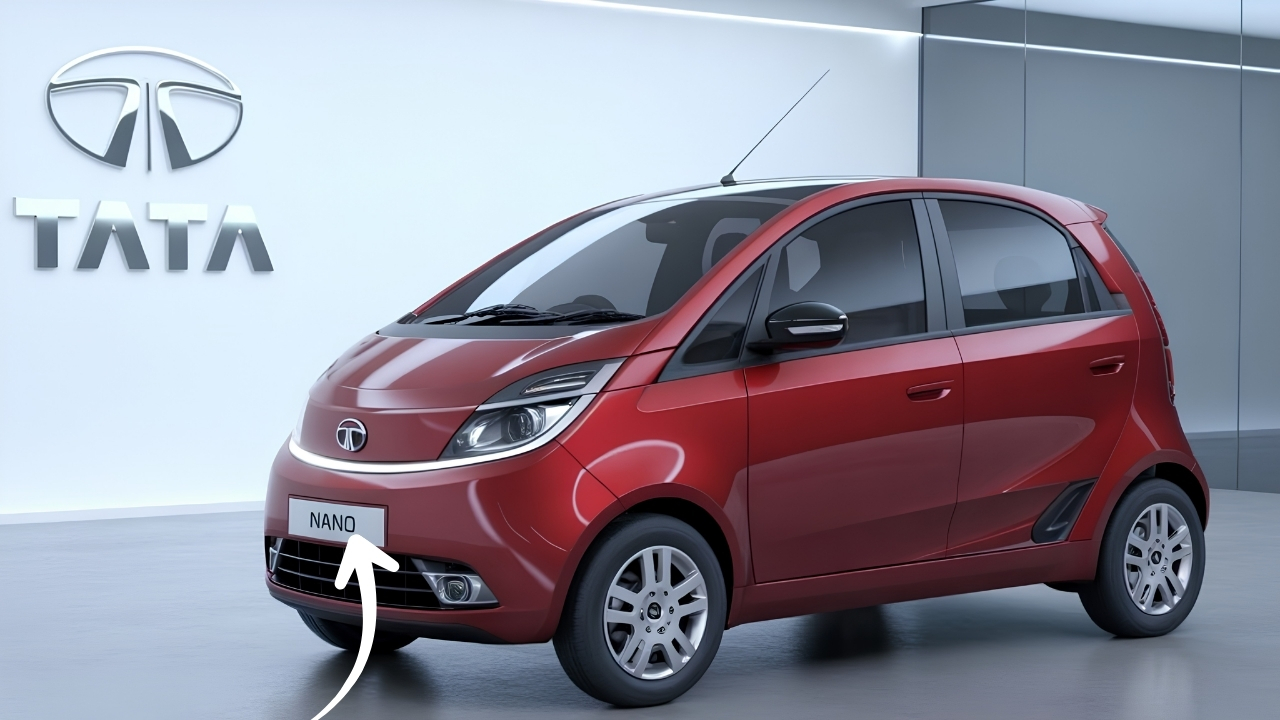
Tata Nano 2026 : The Tata Nano continues to attract attention in India, even years after its production ended. Once promoted as the country’s most affordable new car, the Nano became a memorable part of India’s automobile story.
Now, reports and online discussions are once again suggesting that Tata Motors could revive the nameplate in 2026, possibly as a small electric car for urban customers.
However, buyers should treat these reports carefully. Tata Motors has not officially confirmed the launch of a Tata Nano 2026 or announced its final design, battery, range, features or price. Automotive platforms currently list the Nano EV as an upcoming model with details marked as tentative, while also stating that the company has not shared official information.cars.tatamotors+1
Why the Nano name still matters
The original Tata Nano was launched with a simple idea: make four-wheeler ownership more accessible to Indian families. Its compact dimensions, low running cost and affordable price attracted enormous public interest.
The car was powered by a 624cc two-cylinder petrol engine and was later offered with features such as an automated manual transmission.
The GenX Nano introduced styling updates, an opening tailgate, revised bumpers and an AMT gearbox. Its former Delhi ex-showroom price started at ₹1.99 lakh for the XE variant, while the top XTA AMT version was priced at ₹2.89 lakh.
These figures belong to the older petrol model and should not be confused with the expected price of a possible 2026 electric version.
Possible electric powertrain
If Tata Motors brings back the Nano, an electric version appears more logical than a new petrol model. India’s automotive market has shifted significantly toward electric mobility, and Tata currently sells electric cars such as the Tiago.ev, Punch.ev, Nexon.ev and other models through its official EV portfolio.
A future Nano EV could be designed primarily for city use. Instead of focusing on long-distance travel, Tata might develop it as a compact vehicle for daily commuting, office journeys, school runs and short urban trips. A battery providing more than 200 kilometres of practical driving range would make the car suitable for many city users, although the final figure would depend on battery size, vehicle weight and testing conditions.
Some online reports have mentioned much higher range figures and extremely fast charging times. Those claims remain unverified because Tata Motors has not announced technical specifications for a production Nano EV. Buyers should therefore avoid relying on social media videos or unofficial posts that present estimated specifications as confirmed facts.
Expected features
A 2026 Nano would need much more than a low price to compete in today’s market. Modern buyers expect basic safety equipment, improved comfort and convenient technology, even in entry-level cars.
The possible equipment list could include a touchscreen infotainment system, Bluetooth connectivity, USB charging, power windows, central locking, steering-mounted controls and a digital or semi-digital instrument cluster. A compact turning radius and light steering would also be useful in crowded Indian cities.
Safety would be especially important. A new Nano would be expected to include dual airbags, ABS with EBD, rear parking sensors, seatbelt reminders and a stronger body structure. A rear-view camera could be offered on higher variants. These are reasonable expectations, not confirmed features.
Tata Nano 2026 expected specifications
| Category | Expected details |
|---|---|
| Body style | Compact electric hatchback |
| Powertrain | Single electric motor, expected |
| Battery | Compact battery pack, not confirmed |
| Practical range | Expected to exceed 200 km |
| Transmission | Automatic electric drive |
| Seating capacity | Four passengers, expected |
| Charging | Standard and fast charging may be offered |
| Safety | Airbags, ABS and parking sensors expected |
| Launch status | Not officially confirmed |
Expected Tata Nano 2026 price
Price will determine whether a revived Nano can succeed. The vehicle would need to remain significantly cheaper than larger electric hatchbacks while still offering acceptable safety, battery performance and equipment.
CarDekho estimates that a future Nano EV could be positioned between ₹6 lakh and ₹9 lakh ex-showroom, but this is an industry estimate rather than an official Tata Motors price. The final cost could vary depending on the battery capacity, government incentives, localisation level and manufacturing platform.
| Variant or version | Expected ex-showroom price |
|---|---|
| Tata Nano EV base | ₹6 lakh onwards |
| Tata Nano EV mid variant | ₹7 lakh–₹8 lakh |
| Tata Nano EV top variant | Up to ₹9 lakh |
| Petrol Nano revival | No confirmed information |
For comparison, the Tata Tiago.ev is already positioned as a more established electric hatchback. A Nano EV would need a lower entry price, smaller dimensions or a city-focused battery package to create a clear difference in Tata’s range.
Potential competition
If launched, the Tata Nano EV could face competition from compact electric vehicles such as the MG Comet EV and affordable versions of other upcoming urban EVs. Its biggest advantage would be its small size, which could make parking and traffic navigation easier.
At the same time, Tata would face several challenges. A very small car must still meet safety requirements, provide adequate cabin space and deliver a useful driving range. Battery costs could also make it difficult to achieve the extremely low prices associated with the original Nano.
Final outlook – Tata Nano 2026
The Tata Nano 2026 remains a possibility rather than a confirmed production car. Tata Motors is actively expanding its electric vehicle business, but its official EV pages currently highlight models such as the Punch.ev and Nexon.ev rather than a Nano EV.
A modern Nano could work if Tata positions it honestly as an affordable urban electric car rather than simply repeating the “cheapest car” strategy.
Also Read this – Maruti Alto 800 – King of Indian market return soon at price of ₹3 Lakhs, design is alll new
A practical range, dependable safety equipment, easy charging and a starting price near ₹6 lakh would attract attention. Until Tata Motors releases an official announcement, however, the launch date, specifications and price should be considered estimates only.