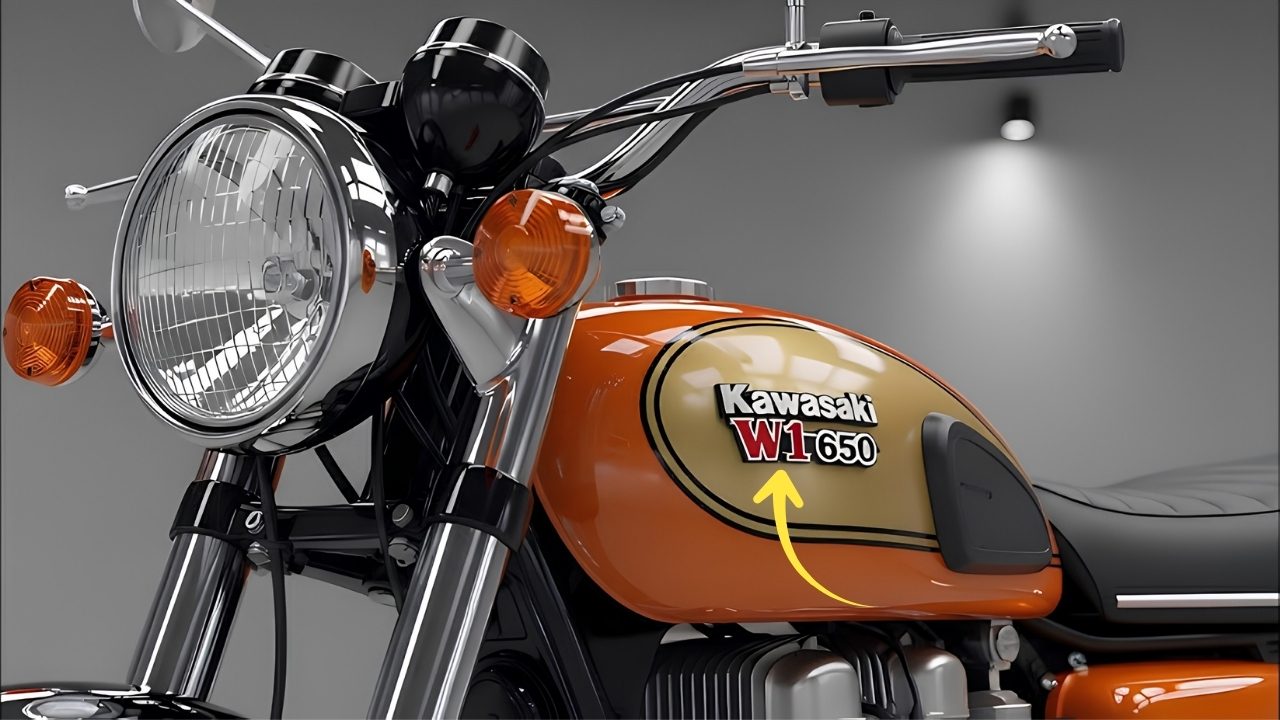
2027 NEW Kawasaki W650 : The Kawasaki W650 remains one of the most admired retro motorcycles ever produced by the Japanese manufacturer.
Its old-school appearance, air-cooled parallel-twin engine and relaxed riding character helped it build a loyal following among riders who value simplicity over excessive electronic equipment.
However, Kawasaki has not officially confirmed a new 2027 W650 production motorcycle. The latest 2027 Kawasaki announcements currently focus on models such as the Versys 650, Vulcan S, Z500, Z1100 and Ninja range, with many of them receiving updated colour schemes rather than major mechanical changes.
That has not stopped speculation about a possible return of the W650. The motorcycle still has strong name recognition, and the growth of the modern-classic segment could give Kawasaki a reason to revisit the W-series in a larger capacity format.
A Classic Design That Still Feels Special
The original Kawasaki W650 was designed to recall the appearance of classic British motorcycles while adding Japanese engineering and dependable everyday usability.
Its rounded fuel tank, wire-spoke wheels, chrome-finished components, flat seat and twin-cylinder engine gave it a timeless roadster character.
A new-generation W650 would likely follow the same design philosophy. Instead of sharp body panels and aggressive aerodynamic styling, the motorcycle could feature a simple round LED headlamp, a narrow tail section, a sculpted fuel tank and twin-pod instruments.
Chrome details may be used around the exhaust, mirrors, engine covers and mudguards to create a more authentic retro appearance.
The challenge for Kawasaki would be maintaining the charm of the original without making the new motorcycle look outdated.
Modern riders expect better lighting, improved braking performance, stronger emissions control and more practical instrumentation. A successful 2027 model would need to combine vintage styling with modern reliability.
Possible Engine and Performance
The earlier Kawasaki W650 used a 676cc air-cooled, four-stroke parallel-twin engine. Historical technical data lists output at approximately 50 horsepower, along with a five-speed gearbox and a relaxed power delivery. The engine was known for its long-stroke character, smooth response and distinctive mechanical appearance.
If Kawasaki brings back the W650 name, the company may choose a modern fuel-injected parallel-twin engine rather than directly reproducing the older carburetted unit.
Fuel injection would help the motorcycle meet current emission requirements and improve starting performance in different temperatures.
The engine could be tuned for strong low- and mid-range torque instead of high-rpm acceleration. That would suit the W650’s intended personality, making it comfortable for city riding, weekend trips and relaxed highway journeys.
Riders would likely appreciate a smooth throttle response, a pleasant exhaust note and enough performance for effortless overtaking.
A six-speed transmission could also replace the original five-speed setup. This would allow shorter lower gears for urban riding and a calmer cruising experience on open roads.
Kawasaki may also consider an assist-and-slipper clutch to reduce lever effort and improve rear-wheel control during aggressive downshifts.
Chassis and Riding Comfort
The original W650 was valued for its friendly handling and upright riding position. Its seat height was listed at around 800mm, while the motorcycle had a wheelbase of approximately 1,455mm. These dimensions gave it a stable stance without making it feel difficult to steer.
A 2027 version could retain a conventional steel frame, although the structure may be lighter and stronger than the earlier design.
The riding position would probably remain neutral, with a wide handlebar, mid-mounted footpegs and a broad seat designed for daily comfort.
Suspension equipment could include a telescopic front fork and twin rear shock absorbers. Adjustable rear suspension would be useful for riders who regularly carry luggage or a passenger.
Kawasaki may also offer a premium version with improved damping components, but the standard motorcycle would likely remain mechanically simple to keep the classic character intact.
Wire-spoke wheels would suit the design, although alloy wheels could be offered on certain versions. A 19-inch front wheel and 18-inch rear wheel combination would provide a traditional appearance and predictable road manners.
Braking and Safety Features
Safety equipment would be one of the biggest differences between the old W650 and any possible 2027 replacement. Modern regulations and customer expectations make anti-lock braking systems an important feature.
The motorcycle could receive a single front disc with a modern caliper and a rear disc brake, supported by dual-channel ABS. This setup would provide better control during emergency braking and on wet roads.
Kawasaki might also include traction control, although its availability would depend on the final engine output and market positioning.
Other likely features include full LED lighting, a USB charging port and a compact digital display. A semi-digital instrument cluster could combine an analogue-style tachometer or speedometer with a screen showing fuel range, gear position, trip information and service alerts.
Bluetooth connectivity is also possible, but Kawasaki may avoid making the W650 excessively technology-focused. The appeal of this motorcycle would be its clean and uncomplicated character.
Expected Features and Practicality
A modern W650 would need to be useful beyond weekend rides. The upright ergonomics could make it suitable for commuting, while the relaxed twin-cylinder engine would allow longer journeys without demanding a sporty riding style.
The fuel tank could hold enough petrol for respectable touring range, although final capacity remains unknown. A centre stand, passenger grab rail and luggage mounting points would be welcome additions for owners who want to use the bike for everyday travel.
Kawasaki could also introduce accessories such as a small windscreen, leather-style panniers, a rear luggage rack, heated grips and a touring seat. These options would allow the same motorcycle to appeal to both urban riders and long-distance enthusiasts.
The W650 name may be especially attractive to riders who want a motorcycle with character but do not want the weight and complexity of a large adventure bike or high-performance roadster.
Market Position and Competition
If launched, the 2027 Kawasaki W650 would enter a competitive modern-classic motorcycle category. It could face rivals from manufacturers offering retro roadsters with parallel-twin and single-cylinder engines.
Buyers in this segment generally look for styling, comfort, manageable performance and emotional appeal rather than outright speed.
Kawasaki already has experience using the W name to connect modern motorcycles with its heritage. The company’s W175 demonstrates that the W-series identity continues to hold importance within the brand, although the W175 is positioned as a smaller-capacity motorcycle.
A larger W650 could therefore serve as a bridge between entry-level retro motorcycles and premium middleweight classics. Its strongest advantage would be the combination of Kawasaki’s established engineering reputation and the W650’s distinctive legacy.
What Buyers Should Expect
At this stage, reports about a 2027 Kawasaki W650 should be treated as speculation rather than confirmed product information.
Kawasaki’s currently announced 2027 range does not establish that a new W650 is on the way, and no official launch specifications have been released.
If the motorcycle is eventually introduced, buyers could reasonably expect a fuel-injected parallel-twin engine, retro styling, ABS, LED lighting and an upright riding position.
The company may also offer several classic colour options, including dark green, black, silver or metallic shades inspired by earlier W-series models.
The most important question is whether Kawasaki can preserve the original motorcycle’s mechanical charm while meeting modern regulations. A quiet, refined and overly digital motorcycle might lose some of the qualities that made the W650 special.
Conclusion
The idea of a 2027 Kawasaki W650 is attractive because the original motorcycle still represents a simple and enjoyable form of motorcycling.
Its classic styling, friendly performance and distinctive parallel-twin character remain relevant in a market increasingly interested in heritage models.
Also Read this – 2027 Toyota 4Runner off-roading powerful engine with luxury look
For now, Kawasaki has not officially confirmed the new W650. Until an official announcement arrives, the motorcycle’s engine, equipment, dimensions, colours and launch timing remain unknown.
If Kawasaki does revive the name, a carefully updated W650 could become one of the brand’s most appealing retro roadsters—provided it delivers modern safety without losing the soul of the original.